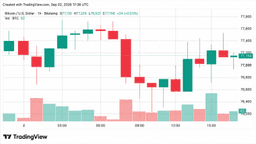
Bitcoin & Cryptocurrency Prices by Market Cap
Top Coins
#
Coin
Price
24h
Market Cap
Volume
7 day trend
Actions
The Tutorial Token ($TUT) is a Binance Smart Chain (BSC) cryptocurrency that originated from a developer's tutorial on creating and launching a token on the BSC testnet. Due to growing community interest, $TUT was later deployed on the mainnet, evolving into a fully tradable token. It can be bought on PancakeSwap and stored in BSC-compatible wallets such as Bitcoin.com Wallet, MetaMask, Trust Wallet, and Ledger. While it started as an educational experiment, $TUT has gained traction within the crypto space, fostering an active community on X and Telegram.
The Tutorial Token ($TUT) is a cryptocurrency on the Binance Smart Chain (BSC). It originated from a developer's tutorial on launching tokens on the BSC testnet and has since been deployed on the mainnet.
You can buy $TUT on PancakeSwap, a decentralized exchange on the BSC network. Ensure you have a BSC-compatible wallet like Bitcoin.com Wallet or Trust Wallet funded with BNB to facilitate the transaction.
Since $TUT is a Binance Smart Chain (BSC) token, it can be stored in any BSC-compatible wallet. The best options include Bitcoin.com Wallet, MetaMask, Trust Wallet, and hardware wallets like Ledger for added security.
The Tutorial Token was initially created as part of a developer's tutorial to demonstrate how to launch a token on the Binance Smart Chain testnet. Due to interest, it was later deployed on the mainnet.

Bitcoin miners pocketed $1 billion in August, but low hashprice and lingering halving pain keep pressure on operators.

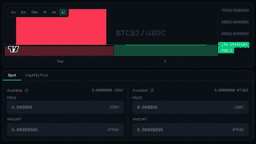
Fork price action turns wild as BTCB2 hits $80 to $176 while an exchange faces "high-risk" warnings and mounting scrutiny.
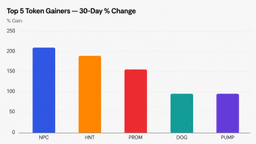
Crypto market winners shined last month, led by NPC’s 206% gain, but September’s bearish history now threatens the rally for everyone.
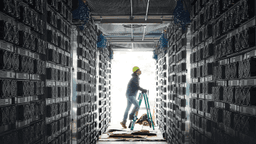
Twenty One Capital CEO Rapha Zagury says bitcoin is experiencing its first sustained bear market in network hashrate.
BTC tumbled toward $76K amid renewed U.S.-Iran military strikes and over $356M in liquidations. Analyst warn a full recovery remains premature