Bitcoin & Cryptocurrency Prices by Market Cap
Top Coins
#
Coin
Price
24h
Market Cap
Volume
7 day trend
Actions
Stellar (XLM) is a decentralized, open-source blockchain platform focused on facilitating fast and low-cost cross-border payments. Launched by the Stellar Development Foundation, Stellar’s primary aim is to connect financial institutions, payment providers, and individuals, allowing them to send money globally with minimal fees. XLM, the native token of the Stellar network, is used for transaction fees and acts as a bridge currency in cross-asset transfers. Stellar’s consensus protocol ensures quick transaction confirmation times, making it ideal for payments and remittances. For live XLM prices, historical data, and market insights, visit our Stellar Markets page to stay informed on Stellar’s impact in the blockchain and financial technology sectors.
Stellar (XLM) is an open-source blockchain platform designed for fast, low-cost cross-border payments. Its primary focus is to connect financial institutions, payment providers, and individuals for efficient global transactions.
Stellar enables quick and affordable cross-border transactions by using XLM as a bridge currency and its consensus protocol for rapid transaction finality, making it ideal for remittances and international payments.

XLM is used to pay for transaction fees and serves as a bridge currency for cross-asset transfers, facilitating efficient and low-cost exchanges on the Stellar network.
You can store Stellar (XLM) in hardware wallets like Ledger or in dedicated Stellar wallets such as Lobstr and Exodus, which provide secure and user-friendly storage options.
Stellar focuses on connecting traditional financial systems with blockchain technology to enable global transactions at low fees, targeting financial inclusion through efficient cross-border payments.
Stellar’s unique position in cross-border payments and its mission for financial inclusion have drawn attention. Investment in XLM should be based on research and an understanding of market conditions and project fundamentals.
Yes, Stellar allows organizations to issue digital assets on its blockchain, making it a flexible platform for creating tokens, stablecoins, and other digital representations of assets.
Gen Z faces an AI career crossroads as 75% of tech jobs demand AI skills, forcing a choice between depth and range.

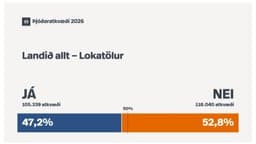
Iceland remains outside the EU MiCA crypto framework as 52.8% of voters rejected resuming discussions to become a European Union state.
Explore the impact of Russia crypto trading legalization. Find out how $46 billion in volume is expected in the first year.

An interactive map estimates how 67 million American crypto holders are distributed across every state and congressional district. Separate data show the