Bitcoin & Cryptocurrency Prices by Market Cap
Top Coins
#
Coin
Price
24h
Market Cap
Volume
7 day trend
Actions

Moca Network (MOCA) is a decentralized identity infrastructure that enables users to create a universal account for their assets, identity, and reputation across multiple ecosystems. Leveraging Animoca Brands' portfolio ecosystem of 540+ companies, Moca Network taps into 700M+ addressable users, providing a seamless and secure experience for users to manage their digital identities. With its native token, $MOCA, Moca Network empowers users to participate in a tokenized economy, where they can earn rewards, access exclusive benefits, and engage with a vibrant community of users. As a decentralized identity solution, Moca Network offers a unique value proposition, enabling users to control their personal data and identity, while providing a secure and transparent way to interact with various web3 applications and services. With its growing ecosystem and strong partnerships, Moca Network is poised to become a leading player in the decentralized identity space, offering a wide range of use cases and opportunities for users to engage with the platform.
Moca Network is a decentralized identity infrastructure that enables users to create a universal account for their assets, identity, and reputation across multiple ecosystems. It leverages Animoca Brands' portfolio ecosystem of 540+ companies to tap into 700M+ addressable users.
MOCA is the coin that powers the Moca Network, an interoperable cultural economy of partner 'subnets' and their corresponding users. It is a fungible token (FT) built on the LayerZero v2 protocol, with a fixed supply of 8,888,888,888 tokens.
MOCA serves as a utility and governance coin within the network, embodying the three pillars of Growth, Culture, and Governance. Its use cases include payment currency, transaction fees, proof-of-loyalty, growth suite, representation of culture, and governance voting.
MOCA can be used as a means of payment for partners' products and services, such as commerce, gameplay sinks, and launcher. It can also be used to pay for various services within the Moca Network on a 'pay per usage' basis.
MOCA is core to the governance layer of the Moca DAO. Using MOCA, participants can vote on Moca Improvement Proposals (MIPs) in the Moca DAO on governance parameters and initiatives expanding the adoption of MOCA.
Moca ID is a decentralized identity (DID) that gives users access to Animoca Brands' 540+ portfolio companies alongside its ever-growing partner ecosystem. It acts as a portable, perk-filled digital identity that can be used across platforms and products.
To get a Moca ID, you need an invite code, which can be obtained through various means such as owning a Moca NFT, participating in marketing and social media campaigns, receiving an invite code from a Moca ID friend, or participating in partner activations.
Mocaverse is the tokenized layer of web3 culture and entertainment ecosystem, seeded by Animoca Brands. Moca ID is a key component of Mocaverse, enabling users to create a true identity that can represent them across the ecosystem.
Moca Network provides a secure and private identity management solution that empowers individuals to control their personal data and identity. It also offers a decentralized and transparent identity verification process, which can help to reduce identity theft and improve trust in online transactions.
MOCA tokens can be bought and traded on major cryptocurrency exchanges like Bitget, HTX, and Gate.io.

TronBid Expands Marketplace: Rent TRON Energy and Reduce USDT Fees
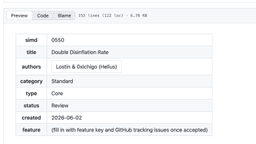
Two Solana proposals could sharply reduce token issuance while increasing burns, potentially cutting staking yields in half within two years.
Bitcoin and ether ETFs extended their inflow streaks to eight sessions on Wednesday, attracting $232.12 million and $192.35 million each.

Kalshi is in advanced talks to become a sponsor of The Athletic. Any deal would need approval from the New York Times’ parent company.

Rockawayx has acquired Relayer Capital, adding a directional long-short strategy to its roughly $2 billion investment platform.
