Bitcoin & Cryptocurrency Prices by Market Cap
Top Coins
#
Coin
Price
24h
Market Cap
Volume
7 day trend
Actions
LayerZero is a decentralized interoperability protocol that enables cross-chain communication between different blockchain networks. It allows developers to build omnichain applications and assets, and facilitates secure, trustless messaging across chains using its Ultra Light Nodes (ULNs) and Decentralized Verifier Networks (DVNs).
LayerZero is an interoperability protocol that enables cross-chain communication between different blockchain networks, allowing for the creation of omnichain applications and experiences.
LayerZero enables blockchain networks to communicate by utilizing a cross-chain messaging protocol. It employs Ultra Light Nodes (ULNs) and Decentralized Verifier Networks (DVNs) to ensure secure and efficient data transmission between chains.
LayerZero's unique feature is its ability to seamlessly connect multiple blockchain networks, providing decentralized interoperability that allows developers to create cross-chain applications. Its use of ULNs and DVNs ensures both efficiency and security.
Binance said its monitoring team detected a malicious DAO proposal, warned the unnamed project and coordinated deposit closures with exchanges before a

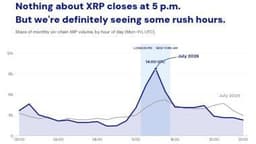
XRP trading has developed a pronounced weekday peak during overlapping London and New York business hours. Evernorth highlighted that the three-hour
U.S. debt topped $40 trillion as bitcoin neared $70,000 and Trump signaled openness to expanding U.S. holdings.

A planned revival of the failed BIP-110 stalled fork is putting an old cryptocurrency hazard back in the spotlight.
President Donald Trump brought cryptocurrency executives, financial market leaders, and federal regulators together at the White House on Aug. 19.


ZRO tokens can be traded on various centralized crypto exchanges. The most popular exchange to buy and trade LayerZero is Binance, where the most active trading pair ZRO/USDT has a trading volume of $827.59 million in the last 24 hours.
LayerZero offers enhanced interoperability between different blockchains, allowing developers to build decentralized applications (dApps) that work across multiple chains. It also enables trustless and secure cross-chain transactions.
ZRO tokens can be stored in any ERC-20 compatible wallet, including MetaMask, Trust Wallet, and hardware wallets like Ledger and Trezor.
As of December 4, 2024, ZRO has a market cap of approximately $695.65 million and a 24-hour trading volume of around $827.59 million. As with any investment, it is essential to conduct thorough research and consider market volatility.