Bitcoin & Cryptocurrency Prices by Market Cap
Top Coins
#
Coin
Price
24h
Market Cap
Volume
7 day trend
Actions
Jupiter (JUP) is a decentralized exchange (DEX) aggregator token that enables users to swap tokens at optimal prices with low slippage and transaction fees within the Solana ecosystem. Launched on the Solana blockchain, Jupiter leverages its advanced features, such as limit orders, dollar-cost averaging, and bridge aggregation, to provide a seamless and efficient trading experience. With a total supply of 1 billion JUP tokens, Jupiter’s native token plays a crucial role in the platform’s governance, incentivizing liquidity providers, traders, and other participants in the ecosystem. As a key player in the Solana DeFi space, Jupiter offers users unparalleled control over their assets, transparent transactions, and a secure trading environment, making it an attractive option for those seeking to navigate the Solana ecosystem with confidence.
Jupiter is a decentralized exchange (DEX) aggregator within the Solana ecosystem. It enables users to exchange tokens at the best possible prices while minimizing slippage and transaction costs. It also identifies the most efficient routes for direct token swaps across multiple exchanges and liquidity pools.
Jupiter aggregates liquidity from multiple decentralized exchanges (DEXs) and liquidity pools within the Solana ecosystem to find the best possible route for token swaps. Its algorithm considers factors such as liquidity, prices, and fees to determine the most optimal route, ensuring minimal slippage and fees.
Jupiter offers a variety of features that include limit orders, dollar-cost averaging (DCA), and a bridge aggregator. With Jupiter, users can schedule swaps at their preferred prices and automate swaps to be executed at regular intervals.
You can buy, sell, and trade Jupiter (JUP) on major cryptocurrency exchanges, such as Binance, Gate.io and Whitebit. To boost your trading experience, bookmark our Jupiter Markets page for live JUP prices and historical data at your fingertips.
The platform’s aggregation of liquidity from multiple sources not only provides users with the best prices but also increases the overall liquidity available to users, making it easier to execute trades. Overall, Jupiter offers a seamless and efficient trading experience, making it easier for users to navigate the Solana ecosystem and trade with confidence.
To store Jupiter (JUP) securely, use compatible self-custodial wallets such as Solflare and Phantom, which support the Solana network and its tokens.
JUP is the native token of the Jupiter ecosystem, allowing holders to participate in governance decisions, such as voting on proposals for the platform’s development and growth. Holding JUP tokens also provides users with discounts on trading fees, making it more cost-effective to use the platform.
Jupiter is a decentralized exchange (DEX) aggregator that operates on the Solana blockchain, and its native token, JUP, has been gaining traction in the cryptocurrency market. However, as with any investment, market conditions and individual risk tolerance should be considered.

Bitcoin miners pocketed $1 billion in August, but low hashprice and lingering halving pain keep pressure on operators.

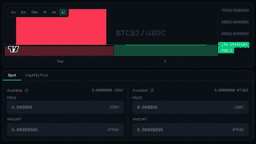
Fork price action turns wild as BTCB2 hits $80 to $176 while an exchange faces "high-risk" warnings and mounting scrutiny.
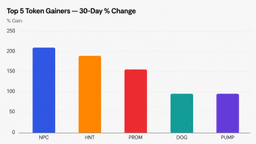
Crypto market winners shined last month, led by NPC’s 206% gain, but September’s bearish history now threatens the rally for everyone.
Twenty One Capital CEO Rapha Zagury says bitcoin is experiencing its first sustained bear market in network hashrate.