Bitcoin & Cryptocurrency Prices by Market Cap
Top Coins
#
Coin
Price
24h
Market Cap
Volume
7 day trend
Actions
Gnosis (GNO) is a decentralized, open-source platform that enables the creation of prediction markets, decentralized finance (DeFi) applications, and other decentralized applications. Founded in 2017 by Martin Köppelmann and Stefan George, Gnosis is built on the Ethereum blockchain and utilizes a proof-of-stake (PoS) consensus mechanism, ensuring a secure, transparent, and energy-efficient network. The Gnosis platform is governed by the GnosisDAO, a decentralized autonomous organization (DAO) that allows GNO holders to vote on proposals and shape the future of the platform. With its native cryptocurrency, GNO, serving as a governance token, Gnosis enables users to participate in prediction markets, DeFi applications, and other decentralized use cases, while also providing a fast, secure, and scalable platform for developers to build and deploy their own applications. As a leading platform for decentralized applications, Gnosis has gained significant traction in the cryptocurrency market, with its GNO token being traded on major exchanges and its use cases expanding into various industries.
Gnosis (GNO) is a decentralized, open-source platform that enables the creation of prediction markets and other decentralized applications. It was founded in 2017 by Martin Köppelmann and Stefan George, and its native cryptocurrency, GNO, is used to govern the platform and facilitate transactions.
The Gnosis token (GNO) serves as the native cryptocurrency of the Gnosis platform. It is used for governance, allowing holders to vote on proposals and shape the future of the platform. GNO is also used to incentivize participation in prediction markets and other decentralized applications on the platform.
Gnosis operates on the Ethereum blockchain, utilizing smart contracts to create and manage prediction markets. Users can create and participate in these markets, betting on the outcome of events. The platform's decentralized nature ensures that all transactions are secure, transparent, and tamper-proof.
Prediction markets on Gnosis are decentralized applications that allow users to bet on the outcome of events. These markets can be used to predict the outcome of sports games, elections, and other events. The platform's decentralized nature ensures that all transactions are secure and transparent.
You can buy, sell, and trade Gnosis (GNO) on major cryptocurrency exchanges, such as Binance, Kraken, and Huobi. You can access real-time GNO prices, historical data, and expert analysis on Bitcoin.com Markets to make informed trading decisions.
Gnosis offers users a decentralized platform for creating and participating in prediction markets. The platform's secure and transparent nature ensures that all transactions are tamper-proof, making it an ideal choice for those looking to participate in decentralized applications.
The Gnosis Chain is a decentralized, open-source blockchain that is used for creation of prediction markets, decentralized finance (DeFi) applications, and other dApps. It is one of the first Ethereum sidechains that is now separate from the Ethereum mainnet, but is still compatible with Ethereum-based smart contracts.
Gnosis Chain is designed to provide a fast, secure, and scalable platform for decentralized applications. It is optimized for use cases that require high transaction throughput, low latency, and low fees, making it an ideal choice for DeFi applications such as prediction markets, and other use cases that require high performance.
Gnosis Chain uses a proof-of-stake (PoS) consensus mechanism, which is more energy-efficient and less vulnerable to centralization than traditional proof-of-work (PoW) mechanisms. This allows Gnosis Chain to achieve high transaction throughput and low latency while maintaining a high level of security and decentralization.
Gnosis Chain achieves scalability through a combination of techniques, including sharding, off-chain computation, and optimized smart contract execution. This allows Gnosis Chain to process a high volume of transactions per second, making it an ideal choice for DeFi applications and other use cases that require high performance.
Yes, Gnosis Chain is an open platform that allows developers to deploy their own smart contracts. Gnosis Chain is compatible with Ethereum-based smart contracts, so developers can deploy their existing contracts on Gnosis Chain with minimal modifications.
To store Gnosis (GNO) securely, use a reputable cryptocurrency wallet that supports Ethereum-based tokens. Hardware wallets like Ledger and Trezor provide offline storage, which is the safest option. You can also store GNO in a secure mobile wallet like Bitcoin.com Wallet or MetaMask.
The GnosisDAO is a decentralized autonomous organization (DAO) that governs the Gnosis platform. It allows GNO holders to vote on proposals and shape the future of the platform. The GnosisDAO ensures that the platform is community-driven and decentralized.



Binance said its monitoring team detected a malicious DAO proposal, warned the unnamed project and coordinated deposit closures with exchanges before a
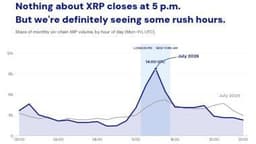
XRP trading has developed a pronounced weekday peak during overlapping London and New York business hours. Evernorth highlighted that the three-hour
U.S. debt topped $40 trillion as bitcoin neared $70,000 and Trump signaled openness to expanding U.S. holdings.

A planned revival of the failed BIP-110 stalled fork is putting an old cryptocurrency hazard back in the spotlight.
President Donald Trump brought cryptocurrency executives, financial market leaders, and federal regulators together at the White House on Aug. 19.