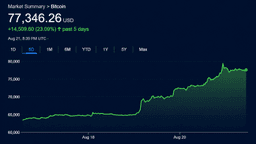
Bitcoin & Cryptocurrency Prices by Market Cap
Top Coins
#
Coin
Price
24h
Market Cap
Volume
7 day trend
Actions

Celo is a mobile-first, carbon-negative blockchain platform designed to facilitate financial inclusion. It uses phone numbers for digital identity and supports stablecoins, offering a sustainable and accessible ecosystem for users worldwide.
Celo is a mobile-first blockchain platform that focuses on enabling financial inclusion globally. It allows users to send and receive digital assets using only a phone number, simplifying the onboarding process for those without traditional banking access.
Celo operates using a mobile-centric design, leveraging the widespread use of smartphones to facilitate easy and low-cost transactions. The platform supports stablecoins and ensures accessibility, even for resource-constrained devices.
Celo is unique for its mobile-first approach and carbon-negative blockchain. It provides an easy onboarding process for users without banking access, allowing them to transact in stablecoins and digital currencies.
CELO tokens can be traded on various centralized exchanges. The most popular exchange to buy and trade Celo is Binance, where the most active trading pair CELO/USDT has a trading volume of $369 million in the last 24 hours.
Celo enables mobile payments using stablecoins, providing a low-cost and efficient means of transferring value. Its commitment to being carbon-negative also supports its goal of creating a sustainable financial system.
CELO tokens can be stored in any ERC-20 compatible wallet, including MetaMask, Trust Wallet, and hardware wallets like Ledger and Trezor.
As of December 4, 2024, Celo has a market cap of approximately $533 million and a 24-hour trading volume of around $369 million. As with any investment, it is essential to conduct thorough research and consider market volatility.

Grayscale says proposed SEC fundraising rules could benefit ETH, SOL and BNB by increasing token issuance, bringing more U.S. issuers and investors

AI agents could open a new phase for XRP by moving from digital purchases toward real-world spending under user-defined limits. Chandler Fang says lasting

A Korean regulator has launched a real-time AI surveillance system to target crypto market manipulation, sparking industry debate .

Ripple, Clearpool and Cicada Partners are building an institutional lending market on the XRP Ledger using RLUSD as the credit asset.
Bitcoin holds $77,000 as Treasury yields, options activity, gold and stocks reshape a volatile market week.