Bitcoin & Cryptocurrency Prices by Market Cap
Top Coins
#
Coin
Price
24h
Market Cap
Volume
7 day trend
Actions
Uniswap (UNI) is the governance token of the Uniswap decentralized exchange (DEX), which operates on the Ethereum blockchain. Launched in 2018, Uniswap revolutionized decentralized finance (DeFi) by enabling peer-to-peer trading of ERC-20 tokens without intermediaries. Using an Automated Market Maker (AMM) model, Uniswap replaces traditional order books with liquidity pools, where users provide liquidity and earn transaction fees. UNI token holders can participate in governance decisions, shaping the future of the protocol. With low fees, open access, and robust security, Uniswap is widely adopted as a key infrastructure in DeFi. Visit our Uniswap Markets page for live UNI prices, historical data, and market trends to stay informed about this leading DeFi project.
Uniswap (UNI) is a governance token for the Uniswap decentralized exchange (DEX) on Ethereum, which allows for peer-to-peer token trading without intermediaries using an Automated Market Maker (AMM) model.
Uniswap enables token trading through liquidity pools rather than traditional order books. Users provide liquidity to these pools, and trades are facilitated automatically through smart contracts, making it a fully decentralized exchange.
Uniswap’s AMM model and decentralized structure eliminate the need for intermediaries, allowing open, permissionless trading of any ERC-20 token. UNI token holders can also vote on protocol changes, guiding the development of Uniswap.
Uniswap (UNI) is available on major crypto exchanges, including our Uniswap Markets page, where you can track live UNI prices, historical data, and market insights for informed trading decisions.
Uniswap provides open, decentralized trading with low fees and no central control. Users can trade a wide variety of tokens and even earn fees by contributing to liquidity pools, making it a versatile platform in DeFi.
To securely store UNI tokens, consider using a hardware wallet like Ledger or Trezor. UNI is compatible with any wallet that supports ERC-20 tokens, offering flexibility in storage options.
Uniswap itself does not have traditional staking, but users can earn rewards by providing liquidity to pools. By adding tokens to liquidity pools, users receive a portion of transaction fees generated on the platform.
Uniswap is popular within DeFi for its decentralized trading model and active governance by UNI holders. As a core infrastructure of DeFi, UNI’s value is tied to the growth of the DeFi sector and adoption of decentralized exchanges.
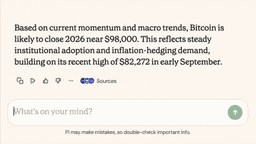
Bitcoin price predictions from 11 AI models see BTC ending 2026 higher, with estimates ranging from $84,500 to $105,480.
The FBI seized more than $560,000 in cryptocurrency intended for Hamas through a series of court-authorized operations. Agents also took control of online

Get insights into the Polish Parliament's response to the Zondacrypto scandal and the failed effort to override the veto.

Goldman Sachs, Jane Street, and Millennium Management led disclosed spot XRP ETF holdings in second-quarter filings. Bloomberg Intelligence data showed