Top Coins
#
Coin
Price
24h
Market Cap
Volume
7 day trend
Actions
Polkadot (DOT) is a next-generation blockchain protocol designed to enable interoperability between different blockchains, allowing them to communicate and share data in a secure, decentralized way. Launched by Dr. Gavin Wood, Polkadot connects independent blockchains into a unified network called a parachain, while its relay chain ensures consensus and security. DOT, the native token of Polkadot, is used for staking, governance, and bonding new parachains. Known for its scalability and flexibility, Polkadot supports a wide range of applications, from decentralized finance (DeFi) to NFTs. Access live DOT prices, historical trends, and market insights on our Polkadot Markets page to stay informed on Polkadot’s impact in the evolving blockchain landscape.
Polkadot (DOT) is a blockchain protocol that enables interoperability between different blockchains, allowing them to communicate and operate as a unified network. It aims to improve scalability, security, and innovation in the blockchain space.
Polkadot connects blockchains through a central relay chain and multiple parachains. The relay chain ensures network security and consensus, while parachains handle individual tasks, allowing each to operate independently yet remain interconnected.
DOT is used for staking to secure the network, governance to vote on protocol updates, and bonding to support new parachains joining the network, making it essential for Polkadot’s ecosystem functionality.
You can store Polkadot (DOT) in hardware wallets like Ledger or in secure mobile wallets such as PolkaWallet and Exodus, which offer accessible storage options for DOT.
Polkadot’s multi-chain architecture, connecting independent blockchains into a single ecosystem, sets it apart. Its flexibility, scalability, and focus on interoperability make it ideal for various use cases, from DeFi to data sharing.
Polkadot’s approach to interoperability and scalability has gained attention, and DOT is widely regarded as a key asset in the blockchain space. As with any investment, decisions should be based on thorough research and individual risk tolerance.
Yes, Polkadot’s interoperable network supports decentralized finance (DeFi) applications, NFTs, and other Web3 technologies, making it an attractive platform for developers and users in the crypto ecosystem.
Crypto’s latest headlines spanned regulation, reserves, macro, privacy, and market structure, including the possible trust charter approvals.

Over the last week, the stablecoin sector posted a contraction of $90.01 million, bringing the market’s total valuation to $323.052 billion.

The Coinbase bitcoin premium fell to -0.085% on May 22, its monthly low, as Coinglass flags growing U.S. institutional selling pressure.

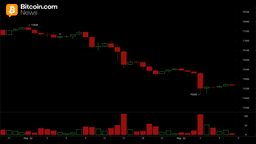
Bitcoin traded near $74.6K on May 23 as bearish momentum, key support levels and sell signals dominated charts.
The SEC approved Nasdaq to list European-style, cash-settled bitcoin index options on the Philadelphia Stock Exchange under ticker QBTC.